




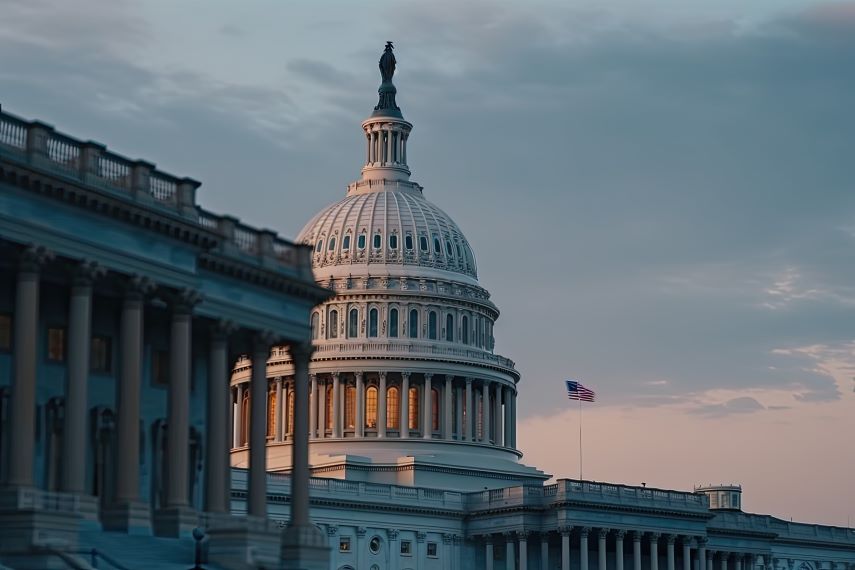
A bipartisan coalition of lawmakers is looking to crack down on Chinese forced labor by exposing Uyghur forced labor in public company supply chains. A new bill proposed in the House of Representatives will require public companies to provide new SEC disclosures listing the following documentation:
“With respect to an issuer, the documentation described under this paragraph is documentation showing whether the issuer or any affiliate of the issuer, directly or indirectly, contains within its supply or production chain—
(A) goods, wares, articles, or merchandise sourced from or through the XUAR, or mined, produced, or manufactured wholly or in part by forced labor identified by mandate of section 2(d)(2)(B)(iv) of Public Law 117–78, including:
(i) the industries contained on the ‘Illustrative List of Industries in Xinjiang in which Public Reporting has indicated Labor Abuses may be Taking Place’ in Annex 2 of the ‘Xinjiang Supply Chain Business Advisory’ (published July 13, 2021) and any successor list; and
(ii) all products listed within ‘high-priority sectors for enforcement’ by the Forced Labor Enforcement Task Force pursuant to Public Law 117–78; or
(B) goods, wares, articles, or merchandise that are mined, produced, or manufactured by an entity engaged in labor transfers from the XUAR or forced labor.”
The Uyghur Forced Labor Prevention Act (UFLPA) was a major piece of human rights legislation in the U.S. It imposed a rebuttable presumption that certain categories of goods produced in China’s Xinjiang region were produced using forced labor. This presumption made these materials very difficult to import into the U.S.
The new disclosure regime pulls the same categories identified in the UFLPA and extends disclosure obligations to companies with such goods in their supply chains. Notably, this law does not limit disclosures to the supply chains of goods imported into and sold in the U.S. This means that multinationals will be obligated to disclose their forced labor exposure globally, even if those supply chains don’t touch U.S. markets. Additionally, the law will require companies sourcing high-risk products to obtain third-party verification of their disclosures. If passed, the SEC will have 180 days from the law’s effective date to implement new rules for Uyghur forced labor disclosures.
Our members can learn more about supply chain management here.
Interested in a membership with access to the complete range of benefits and resources? Sign up now and take advantage of our no-risk “100-Day Promise” – during the first 100 days as an activated member, you may cancel for any reason and receive a full refund. But it will probably pay for itself before then. Members also save hours of research and reading time each week by using our filtered and curated library of ESG/sustainability resources covering over 100 sustainability subject areas – updated daily with practical and credible information.
Practical Guidance for Companies, Curated for Clarity.